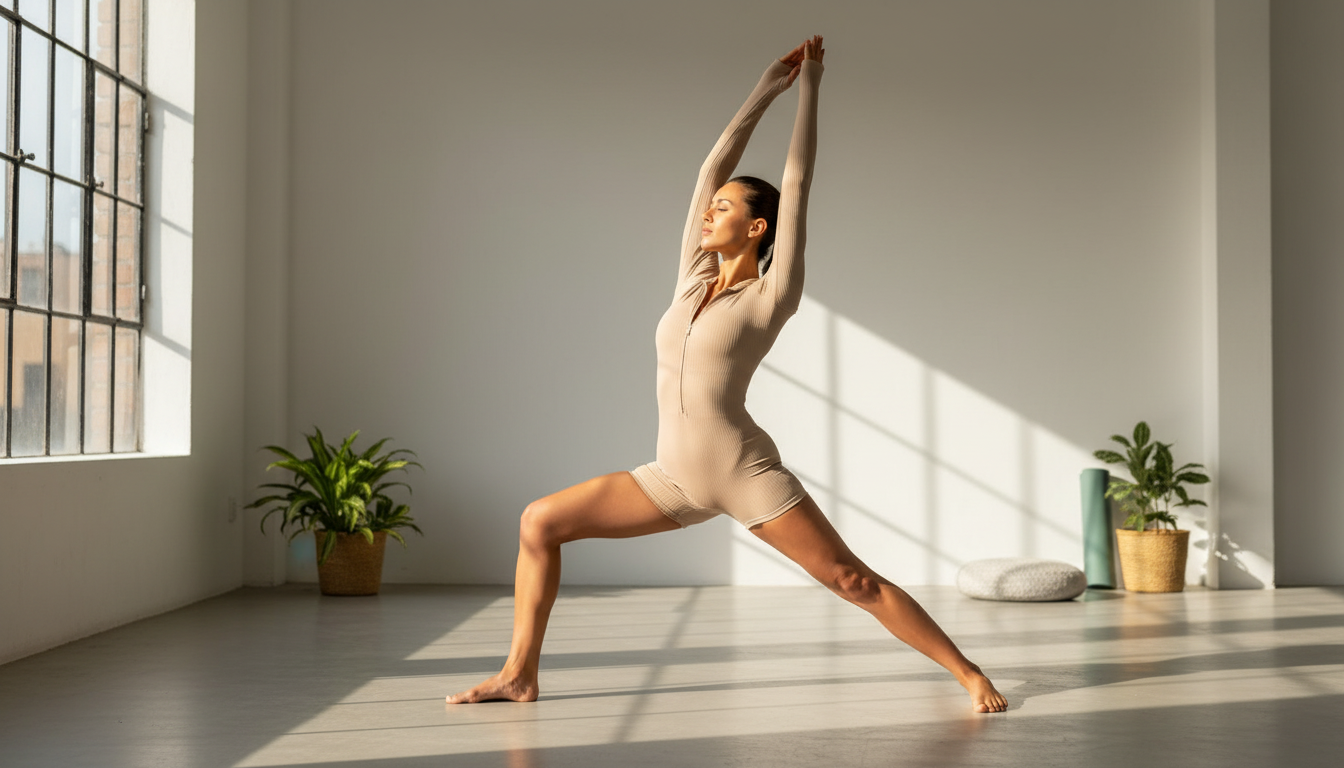
A long sleeve one-piece yoga jumpsuit streamlines getting dressed while delivering a secure, stay-put feel for movement. With fewer hems and waistbands to adjust, it can feel refreshingly “locked in” during flows—then look instantly polished when it’s time to head out for coffee or errands. Below is a practical guide to choosing the right fit and fabric, ways to wear it outside the studio, and simple care habits that help a fitted one-piece keep its shape over time.
Why a long sleeve one-piece works for yoga and beyond
- Less shifting during movement: An all-in-one silhouette reduces waistband rolling and midsection shifting during bends, twists, and inversions.
- Light warmth without bulk: Long sleeves add comfortable coverage for early mornings, cool studios, or outdoor walks—no extra layer required.
- Secure feel for controlled training: A close, supportive fit can feel steady for vinyasa flows, Pilates-inspired work, barre, and other low-impact training.
- Clean base layer for outfits: The smooth lines create a simple foundation for streetwear styling—add an overshirt, jacket, and sneakers for a pulled-together look.
- Easy packing: One piece replaces a top-and-bottom set, which is especially handy for travel, gym bags, or quick outfit changes.
Fit and comfort checkpoints (so it moves with you)
Because a one-piece connects everything—shoulders, torso, hips, and legs—fit matters more than it does with separates. A quick try-on routine can reveal most issues in minutes.
- Torso length: The most common challenge. The suit should lie smooth without pulling at the shoulders or bunching at the waist.
- Sleeve comfort: Reach overhead and rotate your arms; you want freedom through the biceps and underarm seam without pinching.
- Chest support: Decide whether you prefer a built-in shelf bra or room to wear a sports bra comfortably underneath.
- Hip and thigh stretch: The fabric should pass a squat test without feeling sheer or uncomfortably compressive.
- Ankle finish: A clean hem should stay in place during down dog and lunges without riding up.
- Try-on movement check: Do a forward fold, deep squat, lunge twist, and overhead reach—those positions expose most fit problems quickly.
Fabric and performance features to prioritize
- Four-way stretch: Helps maintain range of motion for rotation, extension, and deep bends.
- Moisture management: Useful for heated sessions or brisk walks; quicker drying can reduce that post-workout chill.
- Opacity under stretch: Check in bright light with a squat and hip hinge so you feel confident during class.
- Low-chafe seams: Smooth, well-placed seams help prevent rubbing under the arms and along inner thighs during longer wear.
- Recovery (snap-back): Quality fabric should return to shape after washing to avoid bagging at knees and elbows.
- Breathable balance: Look for supportive compression that doesn’t feel restrictive when you’re holding poses or moving continuously.
If you’re building a well-rounded movement routine, general guidance from credible health and fitness sources can help you match intensity and comfort—see the Mayo Clinic overview of exercise benefits and the American Council on Exercise (ACE) for training considerations.
When to wear it: class types, weather, and layering
Styling ideas for a polished studio-to-street look
Quick comparison: one-piece vs. two-piece sets
One-piece jumpsuit vs. leggings + top
| Feature |
One-piece jumpsuit |
Leggings + top |
| Outfit simplicity |
One decision; instant matched look |
More pieces to coordinate |
| Midsection coverage |
No gap between top and bottom |
Can ride up or separate during movement |
| Bathroom convenience |
Typically slower to remove |
Easier changes |
| Fit flexibility |
Torso length matters more |
Mix sizes for top and bottom |
| Layering options |
Great as a base layer under outerwear |
Top layers depend on chosen shirt |
Care tips to help a fitted jumpsuit last
- Follow the care label: Water temperature and drying guidance help protect stretch fibers; the FTC Care Labeling Rule explains why these instructions matter.
- Wash inside out: Helps reduce surface abrasion and preserves a smooth finish.
- Skip fabric softener when possible: Some performance materials lose moisture management when coated by softeners.
- Air dry or use low heat: Gentler drying helps maintain elasticity and shape recovery.
- Rotate your activewear: Alternating pieces reduces constant stress on high-movement zones like knees, elbows, and inner thigh seams.
Product picks to pair with the look
FAQ
Is a long sleeve yoga jumpsuit suitable for hot yoga?
Yes, if the fabric is lightweight, breathable, and moisture-managing so it doesn’t feel heavy when you sweat. For hotter rooms, prioritize quick-drying stretch and choose your underlayers based on comfort and support.
How should a one-piece yoga jumpsuit fit in the torso?
It should lie smooth without pulling at the shoulders or bunching at the waist. An overhead reach and deep squat are quick tests—if you feel tugging up top or excess folding at the midsection, try a different size or torso length.
What should be worn under a fitted yoga jumpsuit?
Most people prefer seamless underwear and, if needed, a low-profile sports bra that won’t create bulky lines or rubbing. Avoid thick seams and anything that shifts during movement so the jumpsuit stays comfortable through a full class.
Recommended for you









Leave a comment