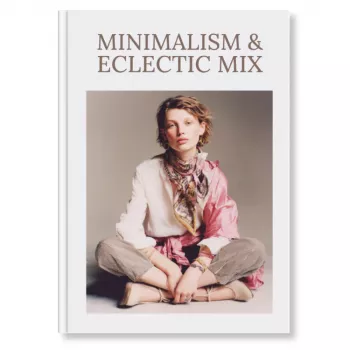
Minimalism and eclectic style can coexist without feeling chaotic or bland. The key is structure: build a clean base, then add personality through a few intentional signature pieces. When your foundation is consistent (fit, palette, and proportion), even bold accessories or vintage touches look curated instead of random. The result is a wardrobe that’s easy to wear, quick to style, and unmistakably personal—without overbuying or overthinking.
Minimal-eclectic style is contrast with control. The minimal side sets the framework—simple silhouettes, fewer colors, repeatable outfit formulas. The eclectic side adds the spark—artful color, prints, vintage elements, statement accessories, or unexpected textures.
It helps to remember that style is closely tied to identity and mood—what you wear can influence how you feel and how you show up. For a deeper look at the behavioral side of clothing, see the American Psychological Association’s overview: The Psychology of Fashion.
A practical way to keep your wardrobe flexible is the 70/30 rule: about 70% minimal foundations and 30% eclectic accents. Foundations include tops, bottoms, and layering pieces you can repeat. Accents are prints, standout jewelry, bold shoes, eye-catching outerwear, or a playful bag.
| Base (Minimal) | Accent (Eclectic) | Result |
|---|---|---|
| Monochrome outfit in black or cream | Statement earrings or sculptural bag | Polished with personality |
| Simple knit + straight-leg pants | Printed scarf or bold belt | Elevated everyday uniform |
| Clean dress or slip-on dress silhouette | Chunky shoes or layered necklaces | Modern contrast |
| Minimal layers (tee + blazer) | Vintage-inspired color pop (bag/shoes) | Curated, not costume |
Eclectic looks best when it has a theme. Choosing one or two recurring “lanes” prevents your closet from feeling scattered and keeps shopping decisions simple.
The easiest way to look intentional is to treat your eclectic element as a “designed interruption” rather than a full-on collision of trends.
If you’re also aiming to buy less and wear more, leaning on a consistent base wardrobe supports longer wear and fewer impulse purchases. For a broader perspective on fashion’s environmental footprint and materials, see: UNEP: Sustainable Materials and Fashion.
When you have go-to templates, getting dressed becomes a quick assembly—not a daily reinvention.
Build a neutral outfit, then add one standout piece (coat, bag, shoes, or artful jewelry). Everything else stays quiet to let the hero read as intentional.
For a more organized, quick-reference version of this approach, explore: Minimalism & Eclectic Mix Guide | How To Mix Minimalism With Eclectic Style | Digital Download Wardrobe & Fashion Styling eBook. It’s designed for anyone who loves clean outfits but misses color, texture, or creative accessories—and wants a system that makes styling feel simple again.
Use a tight base palette and consistent silhouettes, then follow the “one focal point” rule so only one piece dominates. Repeating one detail—like a metal tone, a color accent, or a texture—makes the whole look feel intentional.
About 5–10 versatile statement pieces is plenty, especially if each one works with at least three outfits. Starting with accessories (earrings, bags, scarves, shoes) adds impact with less risk than bold garments.
Add one accent color, one new texture (like linen or leather), and one signature accessory category you’ll actually wear. Then build outfits with the 70/30 approach so the new elements feel balanced instead of overwhelming.







Leave a comment